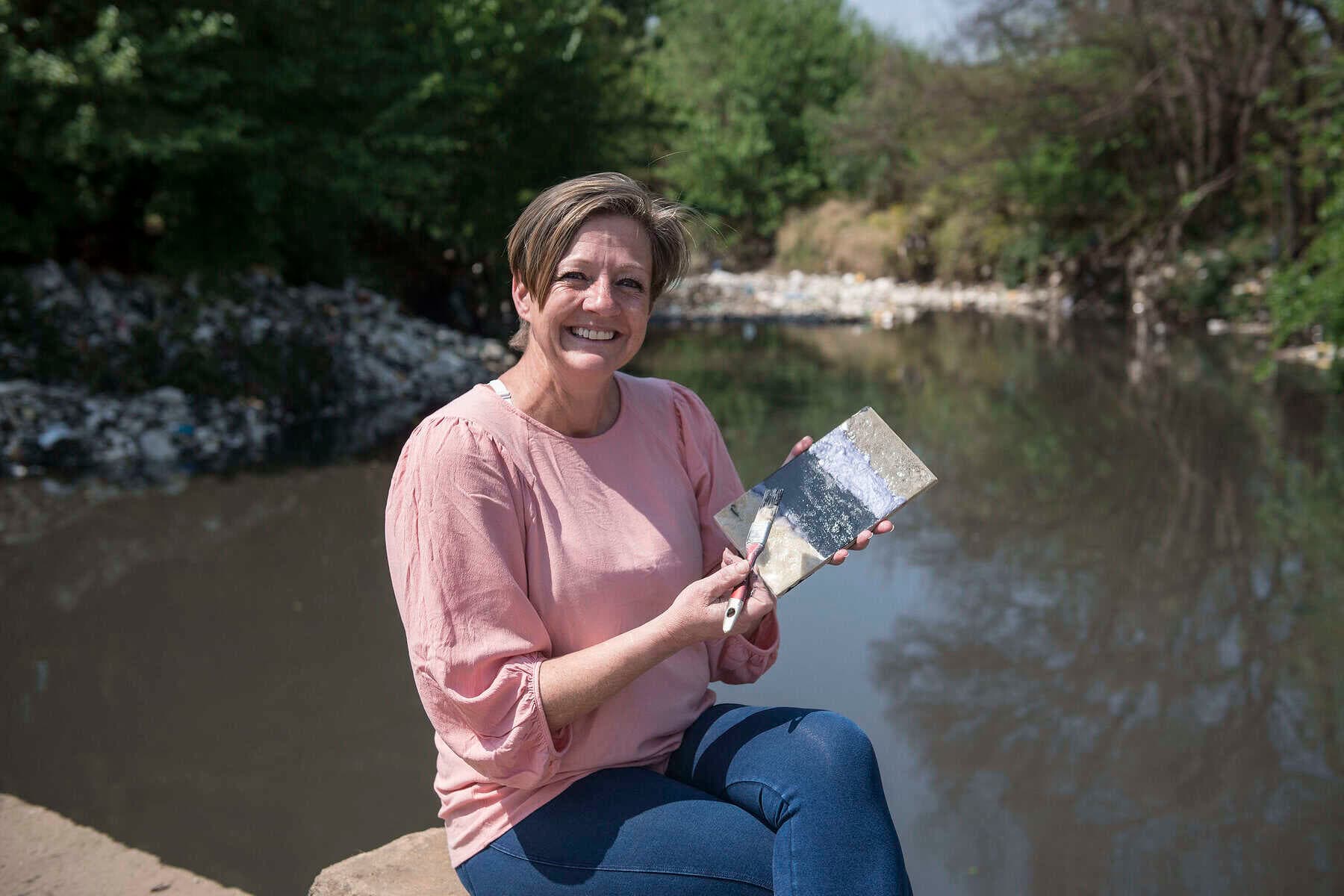
A South African eco-activist has successfully transformed discarded polystyrene waste extracted from Gauteng’s polluted Hennops River into an innovative paint product. This breakthrough, reported by local media on 16 September 2026, represents a creative leap forward in addressing the severe environmental challenges facing South Africa's urban waterways. By turning a highly visible form of river pollution into a usable consumer product, the initiative highlights the growing potential of the local circular economy.
The Hennops River, which flows through parts of Ekurhuleni, Johannesburg, and Tshwane, has long been recognized as one of the most heavily polluted river systems in Gauteng. For years, volunteer groups and environmental organizations have battled massive accumulations of plastic litter, heavy chemicals, and greywater. Among the most troublesome materials recovered from the water is expanded polystyrene. Because it is lightweight and floats easily, polystyrene travels quickly downstream, forming massive blockages that disrupt aquatic ecosystems and cause localized flooding during heavy rains.
Polystyrene presents a unique challenge for waste management systems in South Africa. Due to its low density and high volume, transporting loose polystyrene waste to recycling facilities is often economically unviable. Consequently, vast quantities of this material are sent to landfills or simply dumped, eventually finding their way into natural water basins like the Hennops River. Once in the environment, polystyrene does not biodegrade; instead, it slowly breaks down into harmful microplastics that poison aquatic life and contaminate the broader water supply.
While the initial report by local publication The Citizen does not detail the specific chemical process used or name the individual eco-activist behind the project, the concept of converting polystyrene into paint is a recognized environmental innovation. Typically, such processes involve dissolving the expanded plastic in a suitable solvent to create a durable binder, which is then blended with pigments to produce functional paint. The exact chemical safety, durability, and commercial scalability of this specific Hennops River paint innovation remain key details that are yet to be fully publicized.
The significance of this development extends beyond simple waste reduction. In a country grappling with high unemployment and severe environmental degradation, projects that turn "trash into treasure" offer dual benefits. If this paint innovation can be scaled, it could create much-needed green jobs in waste collection, processing, and manufacturing. Furthermore, it demonstrates how local solutions can reduce South Africa's reliance on imported virgin petrochemicals, which are traditionally used to manufacture commercial paints.
For local river conservation initiatives, this breakthrough could provide a practical outlet for the waste they collect. Currently, community cleanup operations along the Hennops River spend considerable resources gathering and sorting trash, only to face difficulties in finding recycling partners for low-value plastics like polystyrene. A viable local market for recycled polystyrene paint could incentivize more frequent cleanups and provide a sustainable revenue stream for grassroots environmental organizations.
As South Africans watch this innovation develop, several critical factors will determine its long-term success. Observers and environmental experts will be looking to see if the product can meet national manufacturing standards and gain regulatory approval for widespread consumer use. Additionally, support from local municipalities, such as the City of Tshwane, could play a vital role in scaling up the collection of raw polystyrene from river traps to feed this promising new recycling pipeline.