Rassie Erasmus Backs Referee Call After Pivotal All Blacks Scrum Decides Ellis Park Test
Springbok coach Rassie Erasmus has publicly supported a crucial refereeing decision during the Ellis Park Test against the All Blacks. The controversial scrum call reportedly swung the momentum of the match. While specific details of the play remain unconfirmed, the decision has already sparked intense discussion among South African rugby fans.
On Saturday, 22 August 2026, Springbok head coach Rassie Erasmus publicly threw his support behind a critical refereeing decision during the highly anticipated Test match against the All Blacks at Ellis Park. According to initial sports reports emerging from Johannesburg, a pivotal scrum sequence heavily influenced the direction of the match, prompting immediate post-match analysis. Erasmus's decision to back the match official marks a notable moment in the ongoing, intense rivalry between South Africa and New Zealand.
The primary detail confirmed by local sports reports is that a specific refereeing decision regarding a scrum set-piece became a turning point in the Ellis Park Test. In matches of this magnitude, the scrum is frequently a battleground of physical dominance and technical execution. The decision in question reportedly swung the momentum of the game, though the exact phase of play, the specific scrum law penalised, and the final score of the match have not been fully detailed in the immediate post-match reports.
Erasmus’s public backing of the match official is particularly significant given his high-profile history regarding refereeing standards. Historically, the South African Director of Rugby and coach has been known for his meticulous, sometimes controversial, analysis of officiating. By choosing to support the referee's call in this instance, Erasmus has signalled a clear stance on the legitimacy of the decision, even as the call directly impacted a crucial moment against the All Blacks.
Ellis Park Stadium in Johannesburg holds a legendary status in South African rugby, particularly for clashes between the Springboks and the All Blacks. Known for its high altitude and electric atmosphere, the venue has hosted some of the most physical encounters in rugby history. Scrum battles at this altitude are notoriously exhausting, making any refereeing decision in this department highly influential to the outcome of the match.
While the overarching narrative of Erasmus supporting the referee is clear, several critical details remain unconfirmed in the initial wave of sports coverage. It remains unclear which referee officiated the match, what specific infraction was ruled during the decisive scrum, and which players were directly involved in the scrum collapse or penalty. Additionally, the final scoreline and the immediate impact of this result on the tournament standings have yet to be detailed.
In modern rugby union, the scrum has become one of the most complex and heavily scrutinised areas of the game. Decisions made by referees at the set-piece can result in significant territory shifts, penalty kicks at goal, or even yellow cards. Erasmus's alignment with the official's perspective suggests that the Springbok coaching staff viewed the decision as technically correct, despite the high-pressure environment of a home Test against their fiercest rivals.
For South African rugby fans and analysts, this development will undoubtedly spark widespread debate across local sports media and social platforms. Erasmus's comments typically set the tone for how the South African public and media interpret controversial match events. By backing the referee, Erasmus may be attempting to de-escalate potential officiating controversies and keep the team's focus entirely on their technical performance on the field.
As the rugby public awaits more detailed post-match press conferences and official match statistics, the focus will turn to the upcoming fixtures. Observers will be watching closely to see if the All Blacks camp offers a contrasting view of the scrum decision that swung the match. Detailed video reviews and analysis from rugby pundits in both South Africa and New Zealand are expected to emerge in the coming days, shedding more light on the technicalities of the Ellis Park scrum.
Reporting record
How this story was produced
This article was AI-generated from the frozen trend evidence and passed deterministic quality and safety gates. No cross-provider evidence review or independent human verification is claimed for this record.
- Byline
- Newstrends AI Newsroom
- First published
- Last material update
- No later material update recorded
- Distinct source identifiers
- 1 retained source identifier
Frozen source links for this publication
Chronology
Story timeline
A generated chronology for orientation; dates and details may require source verification.
Update
The Test match between South Africa and New Zealand takes place at Ellis Park, with reports emerging that Rassie Erasmus backed a crucial refereeing decision regarding a scrum.
Reader file
Frequently asked questions
01What did Rassie Erasmus say about the referee's call?
According to initial reports on 22 August 2026, Rassie Erasmus publicly backed the referee's decision during a crucial scrum sequence in the Ellis Park Test against the All Blacks.
02Which match is this referring to?
This refers to the Test match between South Africa and New Zealand played at Ellis Park on 22 August 2026.
03What details are currently missing from the reports?
The specific referee's identity, the exact nature of the scrum penalty, the players involved, and the final score of the match remain unconfirmed in the initial reports.
Keep reading
Related coverage
More published reporting connected to this story.

Boks v All Blacks: Cheslin Kolbe and Seven Others to Watch in Historic Ellis Park Test
As anticipation builds for the first Test between the Springboks and the All Blacks at Ellis Park, local media have highlighted eight key players to watch. Among the spotlighted stars is South African winger Cheslin Kolbe, who is expected to play a crucial role in the high-altitude clash.

Twice as Nice: Airlink Delivers Spectacular Double Flyover at Ellis Park for Greatest Rugby Rivalry
Spectators at Johannesburg's historic Ellis Park were treated to a stunning double flyover by Airlink ahead of the Springboks' clash with the All Blacks. The spectacular aerial display has gone viral online, celebrating rugby's greatest rivalry.

Former All Blacks Star Lima Sopoaga Reportedly Receives Death Threats From Springbok Supporters
Former New Zealand flyhalf Lima Sopoaga has reportedly been targeted with death threats by self-proclaimed Springbok supporters. The shocking developments have raised serious concerns about player safety and online abuse within the historic rugby rivalry.
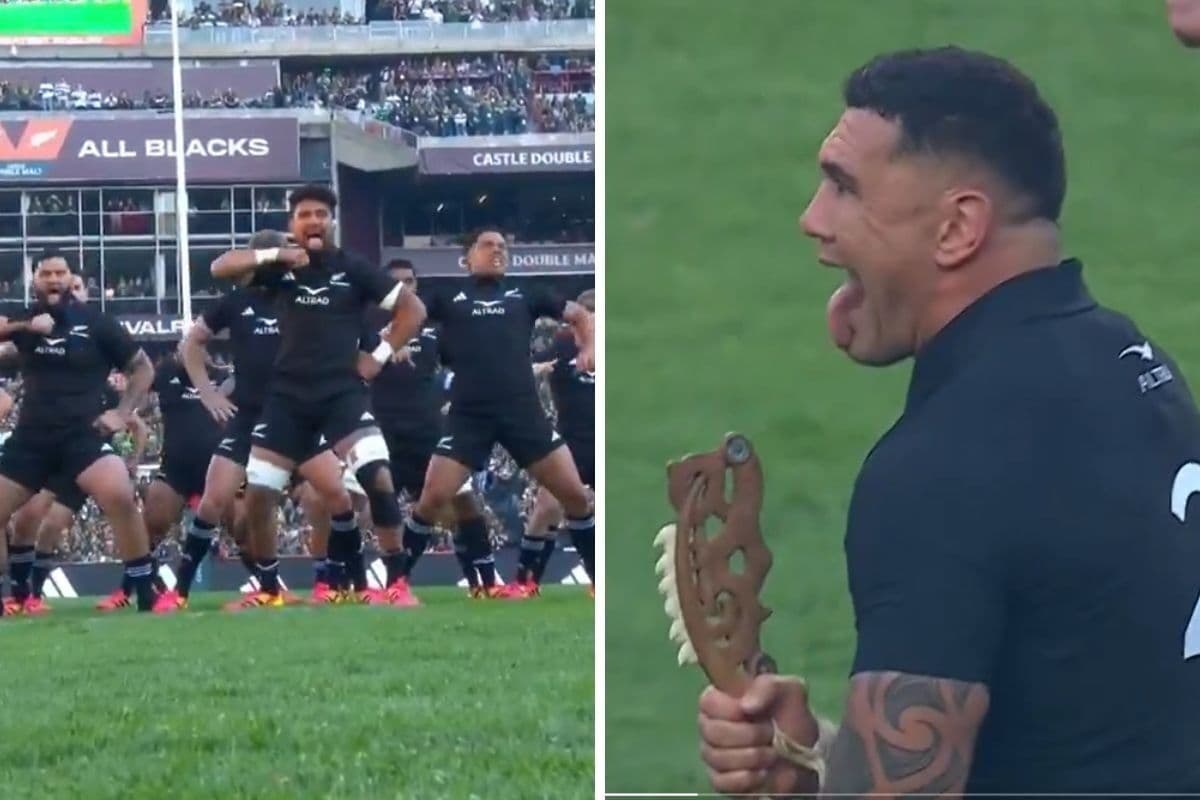
All Blacks’ Iconic Haka Brings Ellis Park to a Standstill in Viral Video
A powerful video of the New Zealand All Blacks performing their traditional Haka at Johannesburg's Ellis Park has gone viral. The dramatic pre-match ritual brought the historic South African stadium to a standstill, captivating rugby fans nationwide. While specific match results remain unconfirmed in initial reports, the footage highlights the enduring intensity of this classic sporting rivalry.
From 1976 to Today: How Billy Bush and the All Blacks Built an Enduring Bond with the Springboks
A retrospective published by IOL highlights the historic bond between the Springboks and the All Blacks. Centred on New Zealand's Billy Bush and the landmark 1976 era, the report explores a sporting friendship that has endured for half a century.