Navi Pillay wins Nobel Peace Prize — then Trump calls it 'disgraceful'
South African jurist and former UN Human Rights Commissioner Navi Pillay has been awarded the Nobel Peace Prize, sparking an immediate and sharp response from US President Donald Trump. Pillay had previously stated that Trump would 'never' win the prize, and Trump has now hit back by labelling her win 'disgraceful'.

South African legal icon Navi Pillay has been awarded the Nobel Peace Prize, in a development that has sent shockwaves through international political circles and sparked an immediate war of words with United States President Donald Trump. The announcement, which emerged on 9 October 2026, quickly went viral — not only because of the significance of the honour itself, but because of the dramatic back-and-forth it set off between Pillay and the American president.
The controversy has its roots in comments Pillay reportedly made prior to the Nobel announcement, in which she stated that Trump would 'never' win the Nobel Peace Prize. Those remarks, which circulated widely, were seen by many observers as a pointed rebuke of the US president's global standing. For South Africans, who regard Pillay as a towering figure in the pursuit of human rights and international justice, her words carried particular weight.
Trump wasted little time in responding once Pillay's win was confirmed. According to reports captured on 10 October 2026, the US president publicly described her Nobel Peace Prize victory as 'disgraceful'. The blunt characterisation drew immediate attention globally and underscored the deep tension between Trump's administration and institutions or individuals associated with international human rights accountability.
Navi Pillay is a figure of immense stature in South Africa and on the world stage. Born in Durban, she rose to become one of the country's most respected jurists, serving as a judge on the International Criminal Court and later as the United Nations High Commissioner for Human Rights. Her career has been defined by an unflinching commitment to accountability, whether addressing war crimes, state abuses, or systemic inequality. For many South Africans, her Nobel Prize represents a validation not only of her personal legacy but of the country's broader contribution to the global human rights project.
The timing of the dispute is significant. The Nobel Peace Prize is awarded each year in October, and the prize committee's selection of Pillay — a figure who has been openly critical of powerful leaders and governments — signals the committee's continued willingness to recognise voices that challenge the status quo. What specific body of work or recent contribution led to Pillay's selection has not been detailed in the available reports, and the full citation from the Nobel committee remains unclear based on the information at hand.
Trump's reaction fits a broader pattern. The US president has a well-documented history of publicly dismissing international institutions and figures he perceives as critical of his administration or the United States' interests. His labelling of Pillay's award as 'disgraceful' is consistent with that posture, though it has drawn fresh scrutiny given that the Nobel Peace Prize is widely regarded as one of the most prestigious honours in the world.
For South Africans following this story, the exchange carries a particular emotional charge. Pillay is a source of national pride, and seeing her achievement dismissed in such stark terms by a sitting US president is likely to provoke strong reactions. At the same time, her earlier prediction that Trump would 'never' win the prize now reads as something of a prophetic provocation — one that has been vindicated by the Nobel committee's choice, even as it has inflamed the response from Washington.
What remains to be seen is how this public dispute develops in the coming days. Whether Pillay responds directly to Trump's 'disgraceful' comment, how the Nobel committee addresses the controversy, and what diplomatic ripple effects — if any — follow from the exchange are all questions that observers will be watching closely. Given both figures' willingness to speak plainly, further exchanges cannot be ruled out.
For now, the central fact stands: Navi Pillay, one of South Africa's most distinguished daughters, is a Nobel Peace Prize laureate. Whatever noise surrounds that achievement, the honour itself is a matter of record — and for millions of South Africans, a moment of genuine pride.
Reporting record
How this story was produced
This article was AI-generated from the frozen trend evidence and passed deterministic quality and safety gates. No cross-provider evidence review or independent human verification is claimed for this record.
- Byline
- Newstrends AI Newsroom
- First published
- Last material update
- No later material update recorded
- Distinct source identifiers
- 1 retained source identifier
Chronology
Story timeline
A generated chronology for orientation; dates and details may require source verification.
Update
Navi Pillay's Nobel Peace Prize win announced; reports emerge of her prior statement that Trump would 'never' win the prize.
Update
Donald Trump publicly calls Navi Pillay's Nobel Peace Prize win 'disgraceful'.
Reader file
Frequently asked questions
01Who is Navi Pillay?
Navi Pillay is a South African jurist born in Durban who served as a judge on the International Criminal Court and as the UN High Commissioner for Human Rights. She has been awarded the 2026 Nobel Peace Prize.
02Why did Trump call Navi Pillay's Nobel Peace Prize win 'disgraceful'?
Trump publicly labelled Pillay's Nobel Peace Prize win 'disgraceful' on 10 October 2026, reportedly in response to her earlier statement that he would 'never' win the Nobel Peace Prize. The full context of his remarks is based on available reports.
03What did Navi Pillay say about Donald Trump and the Nobel Peace Prize?
Prior to winning the Nobel Peace Prize herself, Navi Pillay reportedly stated that Donald Trump would 'never' win the Nobel Peace Prize.
04When was Navi Pillay awarded the Nobel Peace Prize?
The Nobel Peace Prize win for Navi Pillay was reported on 9 October 2026, with Trump's response emerging on 10 October 2026.
Keep reading
Related coverage
More published reporting connected to this story.

Donald Trump Trending in South Africa as Global Interest in US Politics Surges
Donald Trump has emerged as a significant trending topic among South African internet users, with search traffic recorded at over 200 queries captured in early October 2026. While the specific trigger for the spike remains unclear from available data, the trend reflects ongoing global attention on the former and current US political figure. South African audiences continue to follow developments around Trump closely, underscoring the wide international reach of American politics.
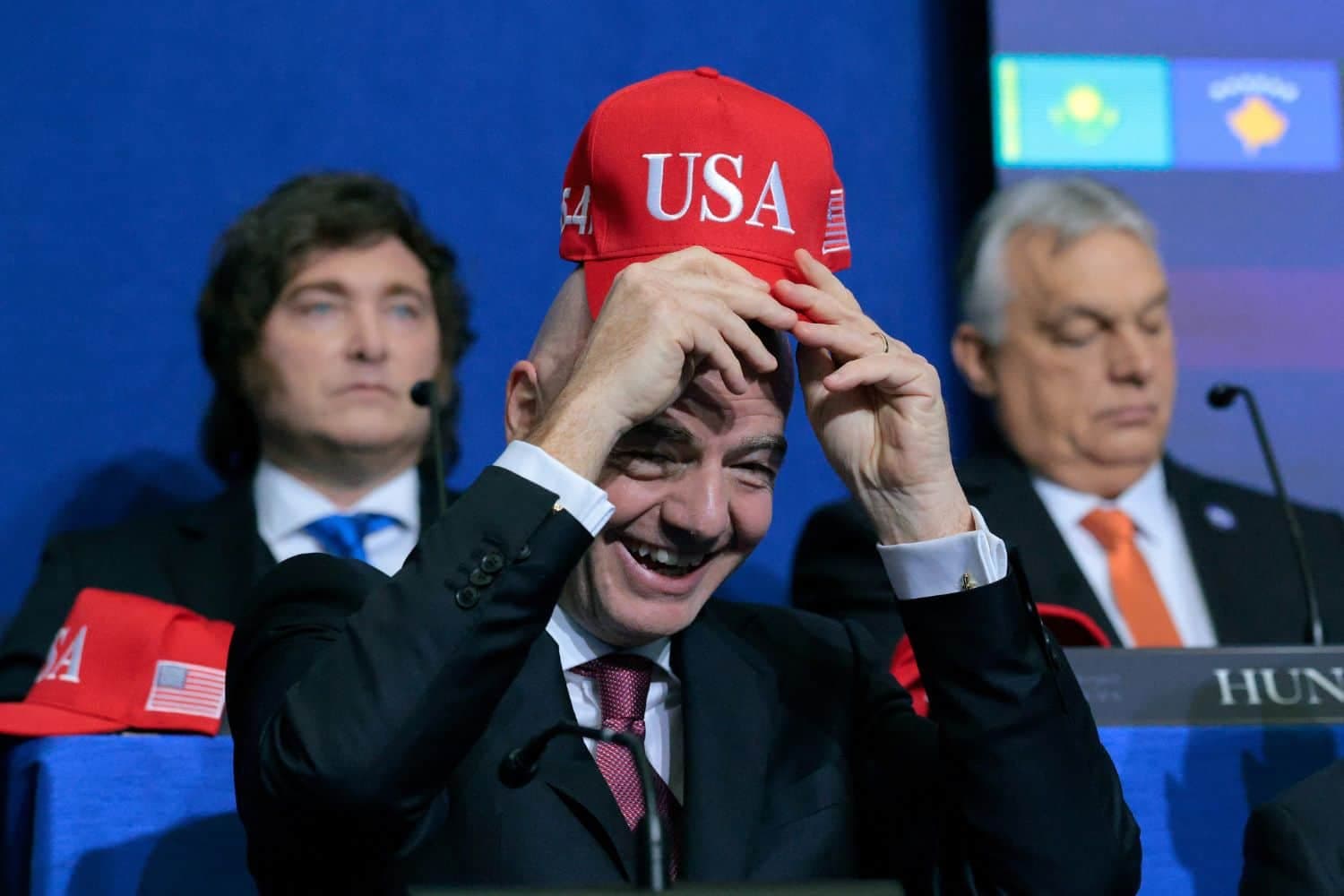
Calls for Action Against FIFA Leadership as Viral South African Editorial Demands 'Red Card' for Gianni Infantino
A viral opinion piece published by South African outlet The Citizen has sparked intense debate over FIFA President Gianni Infantino. The article criticises his leadership, drawing connections to Donald Trump and the FIFA World Cup.
NPA Reviews IDAC Cases and Orders Lifestyle Audits as Masemola is Cleared
The National Prosecuting Authority has initiated a major review of IDAC cases and ordered lifestyle audits, coinciding with the clearance of Masemola. The developments represent a significant shift in South Africa's institutional anti-corruption efforts.

The Citizen Sparking Debate Over Safety Narratives and Violence Against Women in South Africa
An opinion piece published by The Citizen has triggered a viral public discussion regarding safety narratives in South Africa. The article questions why the burden of safety is routinely placed on women rather than focusing on stopping the perpetrators of violence.

TikTok One Launches in South Africa to Challenge YouTube Shorts and Instagram Reels
TikTok One has officially launched in South Africa, positioning itself as a direct competitor to YouTube Shorts and Instagram Reels. The launch intensifies the battle for dominance in the country's fast-growing short-form video market.