Cash-in-Transit Robberies Surge in South Africa with Nearly 120 Incidents Reported
Reports indicate a worrying surge in cash-in-transit (CIT) robberies across South Africa, with nearly 120 incidents documented. The rising figures highlight ongoing security challenges and the sophisticated nature of criminal syndicates targeting financial logistics.
On 13 August 2026, reports emerged detailing a worrying surge in cash-in-transit (CIT) robberies across South Africa, with nearly 120 incidents documented. This sharp increase highlights the persistent security challenges facing the country's financial logistics sector. The latest figures, highlighted in reports by publications such as the Cape Times, have put a spotlight on the escalating nature of these highly organized crimes.
The figure of nearly 120 reported incidents represents a significant point of concern for both law enforcement agencies and private security firms operating in South Africa. While the exact timeframe for these 120 incidents—whether they occurred over a specific quarter, half-year, or a different period—remains unspecified in the initial reports, the sheer volume of attacks points to a coordinated effort by criminal syndicates. The surge underscores the ongoing vulnerability of armored vehicles transporting large sums of money across South African roads.
In analyzing these statistics, several key details remain unconfirmed. For instance, the geographic distribution of these nearly 120 robberies has not been fully detailed, leaving it unclear which provinces—such as Gauteng, KwaZulu-Natal, or the Western Cape—have been hardest hit by this recent wave. Furthermore, the specific monetary losses incurred during these heists, the number of casualties among security personnel and bystanders, and the identity of the affected cash management companies have not been disclosed in the immediate data.
The broader significance of a surge in CIT robberies cannot be understated in the South African context. These incidents are rarely simple thefts; they typically involve highly armed gangs using military-grade weaponry, explosives, and high-speed vehicles to ambush cash vans. The escalation to nearly 120 incidents suggests that criminal networks are operating with a high degree of planning and sophistication, posing a severe threat to public safety on national and regional roads where these confrontations often occur.
Beyond the immediate threat to life, the rise in CIT heists carries heavy economic implications. The cost of securing cash logistics is invariably passed down to businesses and consumers, potentially driving up transaction fees and insurance premiums. Moreover, when cash delivery services are disrupted, local economies—particularly in remote or under-resourced areas that rely heavily on physical cash for daily transactions and social grant payouts—suffer immediate cash flow constraints.
In response to such surges, the private security industry and the South African Police Service (SAPS) are typically forced to re-evaluate their tactical approaches. While specific new measures in response to these 120 incidents have not yet been detailed, historical patterns suggest that stakeholders will likely call for increased aerial surveillance, improved armored vehicle technology, and closer collaboration between state intelligence and private security networks. However, the effectiveness of these measures remains a subject of ongoing debate.
Moving forward, the public and industry stakeholders will be watching closely for official statements from the Ministry of Police and the South African Police Service regarding these statistics. Observers will be looking for concrete strategies to combat the surge, as well as updated quarterly crime statistics to verify if the upward trend persists. Until more detailed breakdowns are provided, the figure of nearly 120 incidents serves as a stark reminder of the security hurdles South Africa must overcome to protect its financial infrastructure.
Reporting record
How this story was produced
This article was AI-generated from the frozen trend evidence and passed deterministic quality and safety gates. No cross-provider evidence review or independent human verification is claimed for this record.
- Byline
- Newstrends AI Newsroom
- First published
- Last material update
- No later material update recorded
- Distinct source identifiers
- 1 retained source identifier
Frozen source links for this publication
Chronology
Story timeline
A generated chronology for orientation; dates and details may require source verification.
Update
Reports emerge detailing a surge of nearly 120 cash-in-transit robberies in South Africa.
Reader file
Frequently asked questions
01How many cash-in-transit robberies have been reported?
Nearly 120 incidents of cash-in-transit robberies have been reported in South Africa.
02Which areas in South Africa are most affected by the CIT surge?
The specific geographic breakdown of the nearly 120 incidents has not been detailed in the initial reports, leaving it unclear which provinces are most affected.
03Who reported these statistics?
The surge was highlighted in reports published on 13 August 2026, including coverage by the Cape Times and IOL.
Keep reading
Related coverage
More published reporting connected to this story.
Monument to Babita Deokaran to be Unveiled on Women’s Day
A new monument dedicated to the memory of Babita Deokaran is scheduled to be officially unveiled on Women's Day. The announcement, reported by the Sunday Tribune, marks a significant moment of national tribute and remembrance.

Strong Winds, Fire Danger and Icy Roads: SA Warned of Hazardous Thursday Weather
South Africans are urged to exercise extreme caution on Thursday, 13 August 2026, due to a hazardous weather forecast. The warning highlights a dangerous combination of strong winds, elevated fire danger, and icy roads across parts of the country.

Guns Linked to Reiger Park Murders Found as School Abuse Reports and Snow Closures Hit Gauteng
South Africa faces a wave of critical developments as police recover firearms linked to the Reiger Park murders. Meanwhile, investigations are underway into alleged abuse in Gauteng schools, and heavy snow forces key road closures.
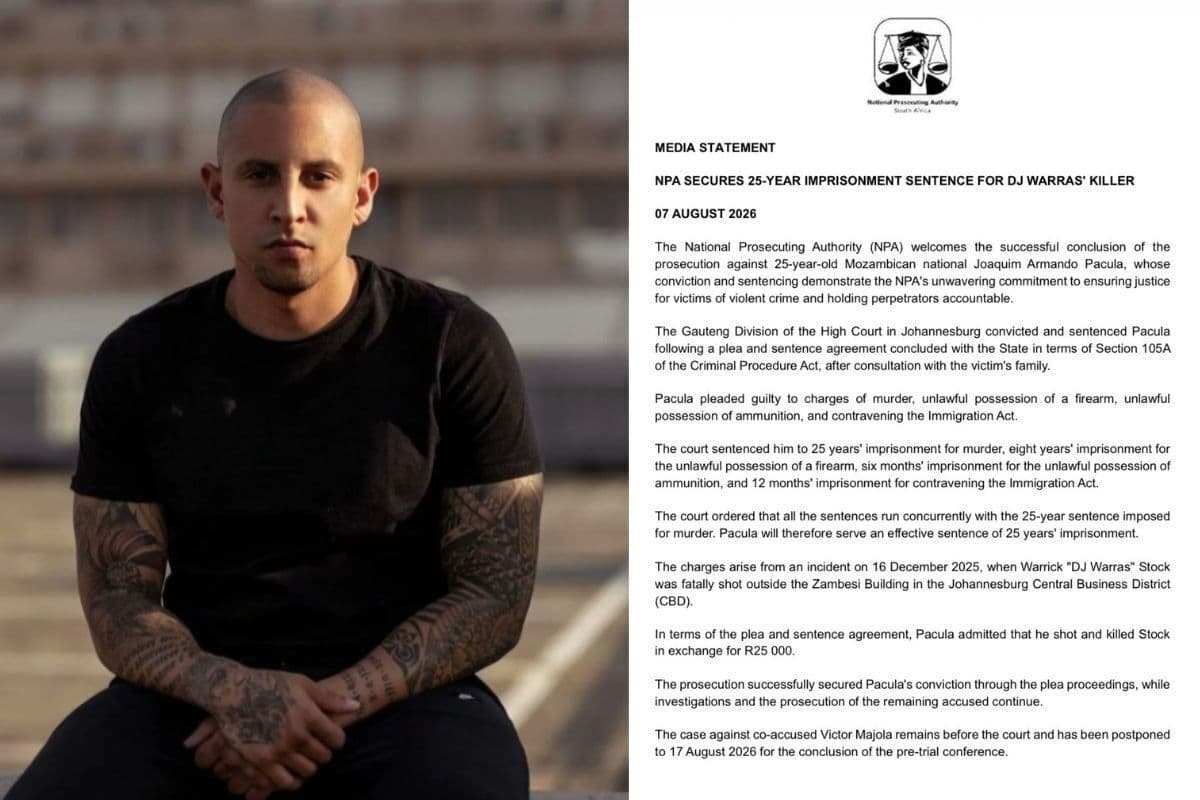
DJ Warras Murder: Convicted Killer Reveals Payment Details as Police Share How They Tracked Him Down
A convicted killer in the DJ Warras murder case has revealed the payment received for the hit. Police have also detailed the tracking methods used to apprehend the perpetrator, marking a major step in the high-profile investigation.
Aadielah Maker Diedericks: South Africans Honour a Life Dedicated to Public Health and Advocacy
Reports from the Sunday Tribune highlight the legacy of Aadielah Maker Diedericks and her lifelong commitment to public health. The coverage has sparked widespread interest, highlighting the vital role of health advocacy in South Africa.